Ars Ex Machina: El arte generativo y la "muerte del internet"
- Rever Multimedio
- hace 6 días
- 6 Min. de lectura
Ars Ex Machina: Generative art and 'the death of the internet'
por Javier Lozano
En 2016 se hizo famosa una teoría sobre “la muerte del internet” en un portal virtual llamado Wizardchan, donde múltiples usuarios anónimos de la plataforma se unieron a un post publicado por IlluminatiPirate para discutir sobre la posibilidad de que el internet estuviera lentamente extinguiéndose.
A pesar de lo aciago que representa la idea y de lo exagerado que suena el comentario de “la muerte del internet”, la realidad es que se trata de una construcción lógica basada en la poca (y cada vez más nula) interacción humana que existe en el medio. Las interacciones reales y el magno propósito de un medio de comunicación accesible y libre están siendo reemplazados por granjas de contenido y bombardeos de información.
Más que morir como tal, el internet tiene hoy un significado diferente al que solía tener. La herramienta que nos permitía ejercer la libertad de expresión y comunicación está siendo controlada como medio de influencia en nuestra toma de decisiones diarias. La inteligencia artificial ha tomado una relevancia central como agente de cambio en la construcción de los llamados “algoritmos”.
Todo el contenido generado como medio de atracción para el consumo masivo es algo que hemos aceptado como comunidad, y la sensación de exploración o aventura ha sido reemplazada por el endless scrolling. No hay nada más que el internet nos pueda ofrecer, y eso está bien. Hemos puesto demasiada presión sobre el “medio del futuro”, olvidándonos de apreciar las ventajas y oportunidades que aún ofrece.
Todos contribuimos activamente a vivir en el mundo de los “trends”, el “scrolling”, el “fast content” y los videos creados mediante inteligencia artificial que tratan de imitar situaciones reales. La idea de consumir media artificial e irreal sin contar con las herramientas humanas para detectar el nivel de realismo con el que fue creada me asusta profundamente. La invasión del internet en el mundo real es potencialmente un peligro para una vida digna.
In 2016, a theory about “the death of the internet” gained notoriety on a virtual forum called Wizardchan, where multiple anonymous users joined a post published by IlluminatiPirate to discuss the possibility that the internet was slowly fading away.
Despite how ominous the idea may seem, and how exaggerated the notion of “the death of the internet” might sound, the reality is that it represents a logical construction based on the limited, and increasingly minimal, human interaction that exists within the medium. Genuine interactions and the grand purpose of an accessible and free means of communication are being replaced by content farms and information overload.
Rather than dying outright, the internet now holds a different meaning from the one it once had. The tool that once enabled freedom of expression and communication is increasingly being controlled as a means of influencing our daily decision-making. Artificial intelligence has taken on a central role as an agent of change in the construction of so-called “algorithms.”
All content generated as a means of attracting mass consumption is something we have collectively accepted, and the sense of exploration or adventure has been replaced by endless scrolling. There is nothing more the internet can offer us, and that is fine. We have placed too much pressure on the “medium of the future,” forgetting to appreciate the advantages and opportunities it still provides.
We all actively contribute to living in a world of “trends,” “scrolling,” “fast content,” and videos created through artificial intelligence that attempt to imitate real situations. The idea of consuming artificial and unreal media without possessing the human tools to detect the level of realism with which it was created deeply unsettles me. The invasion of the internet into the real world is potentially a threat to a dignified life.
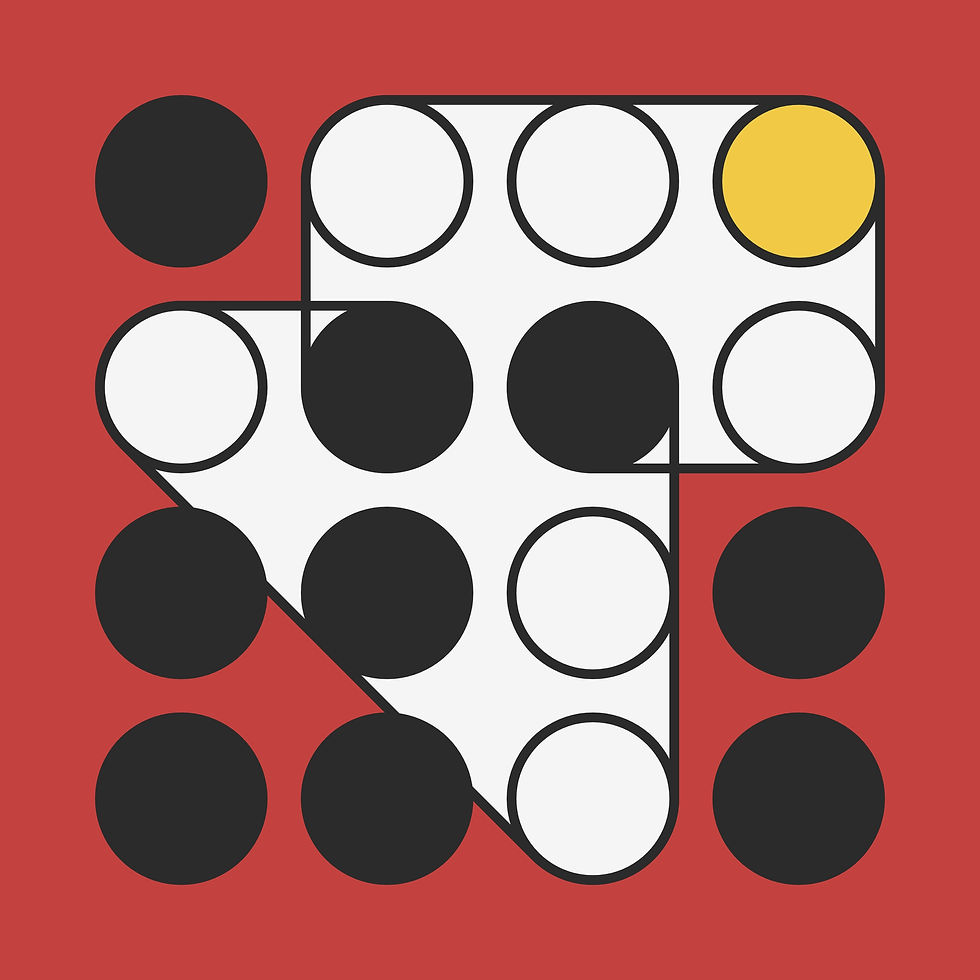
Colección "noisy circles" por michelleinspace // 'noisy circles' collection by michelleinspace
En este contexto surge el arte generativo, no como una anomalía, sino como una consecuencia lógica del internet contemporáneo. Ars Ex Machina (del latín: Arte de la máquina) no representa únicamente la automatización del proceso creativo, sino también la materialización estética de un medio saturado, predecible y cada vez menos humano.
Así como el internet dejó de ser un espacio de exploración para convertirse en una fábrica de estímulos, el arte generado por inteligencia artificial reproduce formas, estilos y emociones sin haberlas vivido.
Within this context, generative art emerges not as an anomaly, but as a logical consequence of the contemporary internet. Ars Ex Machina (from Latin, Art of the Machine) represents not only the automation of the creative process, but also the aesthetic materialization of a saturated, predictable, and increasingly less human medium.
Just as the internet ceased to be a space of exploration and became a factory of stimuli, art generated by artificial intelligence reproduces forms, styles, and emotions without having lived them.
No es el fin del arte, sino el reflejo de un ecosistema digital que ya no necesita experiencia para producir significado.
It is not the end of art, but rather the reflection of a digital ecosystem that no longer requires experience to produce meaning.
Aceptar el Ars Ex Machina como una evolución “inevitable” implica renunciar a una de las condiciones fundamentales de la práctica artística: la vivencia. La creación, entendida como un proceso que atraviesa el cuerpo, la memoria y el contexto, se diluye cuando la producción artística se reduce a una combinación estadística de datos preexistentes. En este sentido, el arte generativo no expande el campo artístico; más bien, lo comprime en un espacio donde habita y se alimenta de sí mismo.
Artistas y colectividades han comenzado a plantear interrogantes concretas sobre la propiedad intelectual, los derechos del artista y el papel del creador frente a estos sistemas automatizados.
En Montreal y Toronto, por ejemplo, festivales como el Provocation Ideas Festival han dado espacio no solo a exhibiciones de obras generadas con IA, sino también a debates públicos sobre su impacto social y ético, funcionando como foros de reflexión más allá del simple asombro tecnológico.
Al mismo tiempo, figuras como Dmitri Cherniak, cuyo proyecto de arte generativo Ringers produjo una serie de 1,000 obras únicas en blockchain (los llamados NFTs), muestran cómo el arte basado en código puede convertirse en un producto rentable sin aportar una crítica sobre los efectos estructurales de la automatización de la creatividad.
Su éxito comercial no solo corrobora la viabilidad económica del arte generativo, sino que también ilustra cómo estas prácticas pueden producir nuevas formas de colonización al subordinar el proceso artístico al mercado, a la especulación financiera y a circuitos de acumulación que reconfiguran el sentido de lo que entendemos por creación.
To accept Ars Ex Machina as an “inevitable” evolution is to renounce one of the fundamental conditions of artistic practice, lived experience. Creation, understood as a process that passes through the body, memory, and context, dissolves when artistic production is reduced to a statistical combination of preexisting data. In this sense, generative art does not expand the artistic field, instead, it compresses it into a space where it inhabits and feeds upon itself.
Artists and collectives have begun to raise concrete questions regarding intellectual property, artists’ rights, and the role of the creator in relation to these automated systems.
In Montreal and Toronto, for example, festivals such as the Provocation Ideas Festival have provided space not only for exhibitions of AI-generated works, but also for public debates on their social and ethical impact, functioning as forums for reflection beyond mere technological awe.
At the same time, figures such as Dmitri Cherniak, whose generative art project Ringers produced a series of 1,000 unique blockchain-based works (the so-called NFTs), demonstrate how code-based art can become a profitable product without offering a critique of the structural effects of automating creativity.
Its commercial success not only confirms the economic viability of generative art, but also illustrates how these practices can produce new forms of colonization by subordinating the artistic process to the market, financial speculation, and circuits of accumulation that reconfigure our understanding of what creation means.
Desde mi perspectiva, debemos cuestionar el lugar que el Ars Ex Machina ocupa dentro de un sistema que confunde generación con creación.
La influencia de la inteligencia artificial, lejos de ampliar las posibilidades creativas en el proceso artístico, está consolidando lentamente una nueva forma de colonialismo cultural: un sistema que, mediante algoritmos, extrae el valor estético y simbólico para acumularlo y comercializarlo al margen de la experiencia humana, aquella que necesariamente otorga sentido pleno al arte.
From my perspective, we must question the place that Ars Ex Machina occupies within a system that confuses generation with creation.
The influence of artificial intelligence, rather than expanding creative possibilities within artistic processes, is slowly consolidating a new form of cultural colonialism, a system that, through algorithms, extracts aesthetic and symbolic value in order to accumulate and commercialize it outside of human experience, the very experience that necessarily gives art its full meaning.
En un internet que ya no necesita sujetos, el acto de crear desde la experiencia se vuelve, paradójicamente, un gesto de resistencia.
In an internet that no longer needs subjects, the act of creating from lived experience becomes, paradoxically, an act of resistance.
Opinión por Javier Lozano // Opinion by Javier Lozano
Rever Multimedia


Comentarios